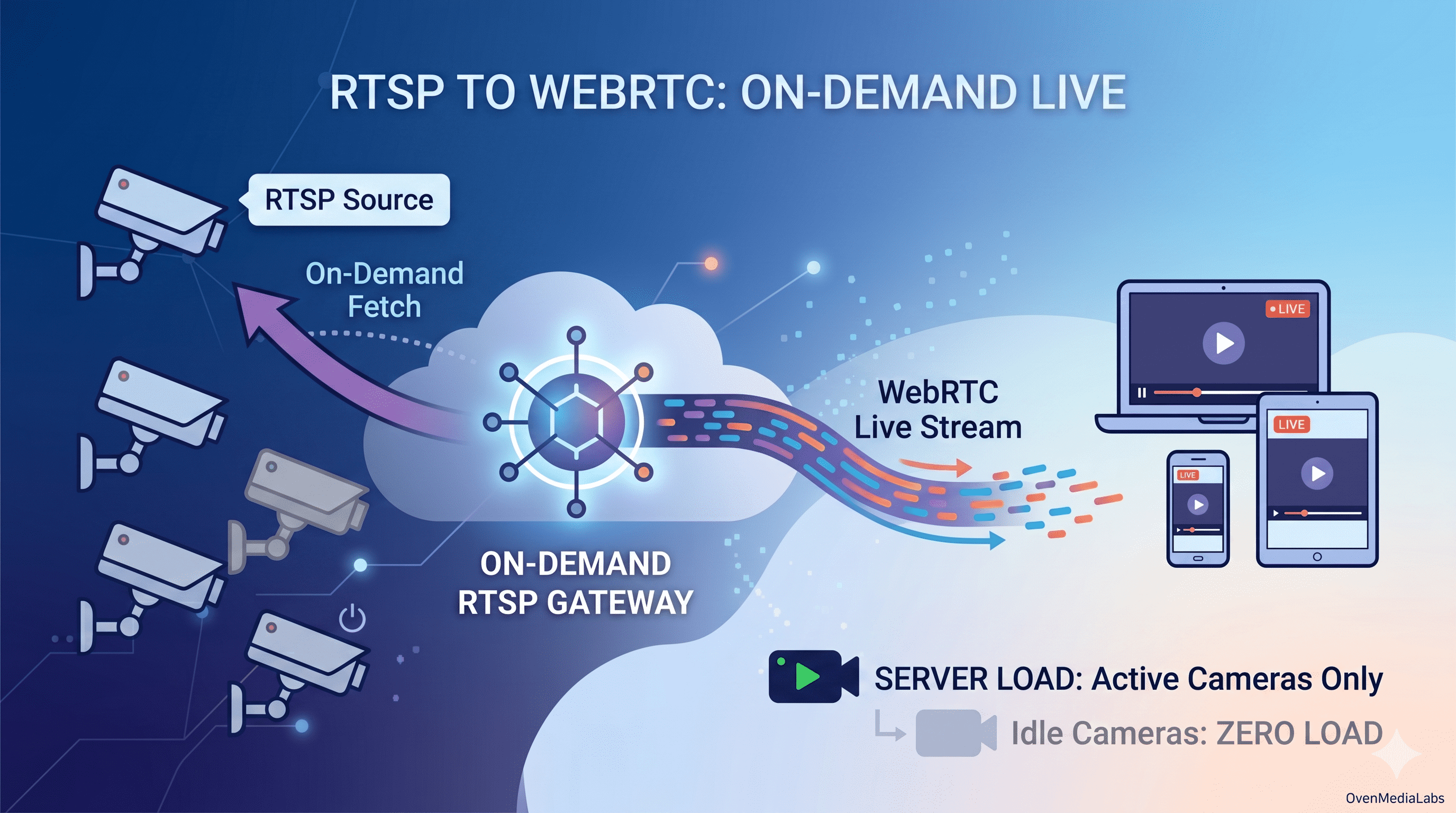
Real-Time is
Not 10 Seconds Late.
In the era of live interaction, Live should mean Now.
Understand why latency occurs and how we achieved Sub-Second Latency.
Why is your stream delayed?
Many people believe their live stream is happening in real-time, but they are actually watching the past.
The "Chunk" Bottleneck
Legacy protocols like HLS or DASH slice video into "Chunks" (segments) of 2~10 seconds. Players typically buffer 3 of these chunks to ensure stability.
e.g., 3 Chunks × 10 Seconds = 30 Seconds Delay.
This buffering creates a massive gap between the streamer and the viewer.
Latency Reality Check
Passive viewing only. Impossible to have real-time chat.
Improved, but still feels "slightly off" for live interaction.
Sub-Second Latency. True real-time synchronization.
What Can You Do with Zero Delay?
Latency close to zero means you can finally communicate naturally.
Live Auction & Commerce
Bids must happen instantly. A 5-second delay could mean losing a deal. Ensure fair, real-time bidding.
iGaming & Betting
Trust is built on visibility. Players need to see the card turn or the ball drop the moment it happens.
Interactive Webinar
Q&A sessions shouldn't be awkward. Have a natural conversation with thousands of viewers.
Engineered for Sub-Second
OvenMedia Labs' mission is to democratize high-quality, ultra-low latency streaming.
We combined the best open-source protocols to create a powerful engine.
WebRTC
The gold standard for real-time communication. We optimized WebRTC for one-to-many broadcasting, overcoming its traditional scaling limits.
- Frame-based: Renders frames as soon as arrive.
- Sub-500ms Latency: Instant, interactive feedback.
- No Plugins: Modern browser support.
LL-HLS
Extended HLS protocol. With Chunked Transfer Encoding and HTTP/2, we cut typical HLS latency from tens of seconds down to about 2-3 seconds.
- Firewall Friendly: HTTP/TCP based.
- HLS-Compatible: Works with existing HLS/CDN.
- ABR Support: Seamless streaming quality.
SRT
Quality in, quality out. We use SRT instead of aging RTMP to keep both ingress and egress stable, even over unreliable public networks or between sites.
- Reliable: End-to-end packet loss recover.
- Low Jitter: Smooth input & output stream.
- Modern Standard: Future-proof.
From the Labs
From the OvenMediaEngine Engineers.
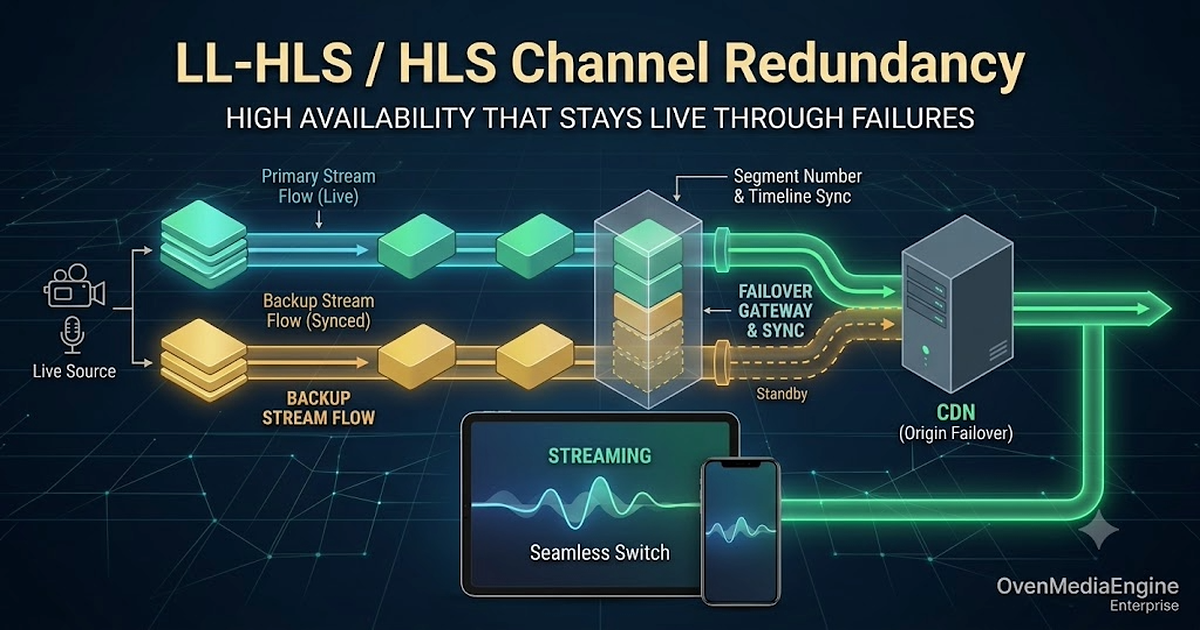
LL-HLS / HLS Channel Redundancy: High Availability That Stays Live Through Failures
Real LL-HLS / HLS channel redundancy comes down to keeping two Origins, Primary and Backup, in sync. Here is what has to line up in the encoder-origin path, especially the timeline and the segment numbers.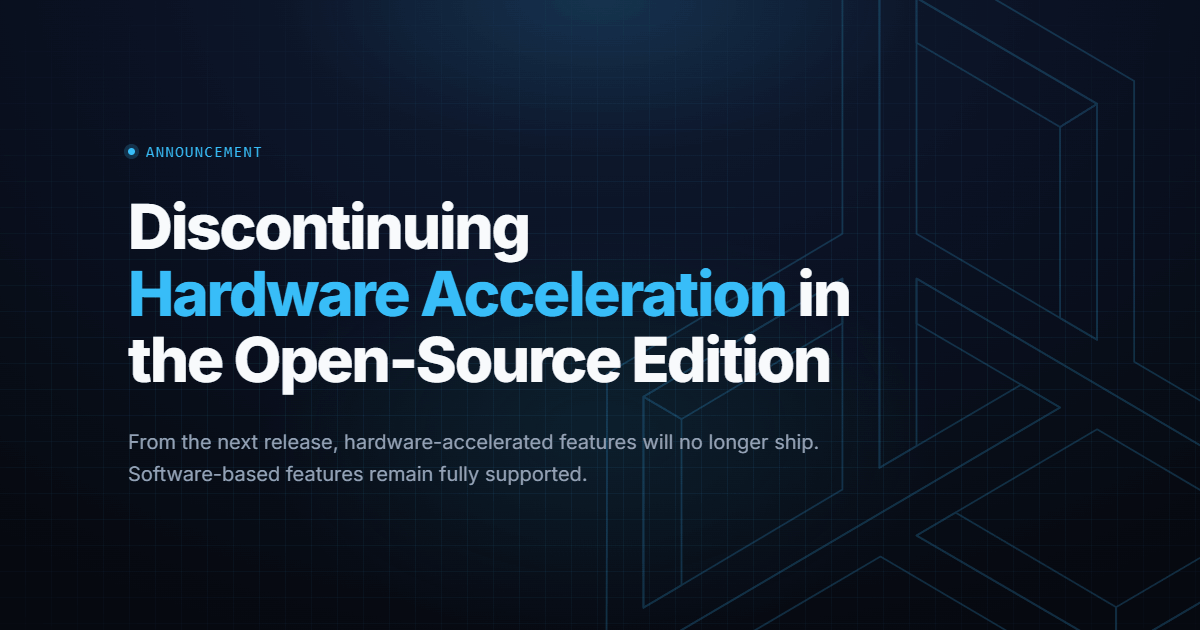
Open-Source Edition: A Note on Discontinuing Hardware Acceleration
Starting with the next release, hardware-accelerated features including NVIDIA and Intel QuickSync support will no longer be available in the open-source edition of OvenMediaEngine.